— 7 MIN
Mastering Stock Market Alerts: How Real-Time Risk Alerts Protect Your Portfolio
Learn how real-time portfolio alerts — price triggers, VaR limit alerts, concentration limits, and drawdown notifications — automatically protect your capital. A complete guide to professional-grade portfolio risk monitoring.
In modern capital markets, volatility is a constant. Prices can gap sharply on earnings reports, macroeconomic data can shift market sentiment within milliseconds, and the portfolio correlations investors rely on can break down without warning. Continuously monitoring a terminal screen is neither practical nor efficient — not for the independent investor, the financial advisor managing multiple client books, or the quantitative analyst running a systematic strategy.
The logical solution is automation. But the kind of automation most retail platforms offer — a simple notification when a stock crosses a price — is a starting point, not a strategy. To genuinely protect capital, investors must evolve from single-asset price-checking to real-time portfolio alerts that monitor the holistic, mathematical risk structure of an entire portfolio simultaneously.
This guide explains the four essential alert types every risk-aware investor should deploy, compares what each one measures, and walks through how to configure all four within a single platform — without writing a single line of code.
Why Basic Price Alerts Are No Longer Sufficient
Historically, a standard stock market alert was purely binary: notify the user when Stock A crosses Price B. This mechanism is undeniably useful for timing entries and exits or tracking breakouts from technical levels. But it is structurally blind to the most dangerous risks a portfolio faces.
Consider what basic price alerts miss entirely. Your highest-conviction position does not trigger any price alert — but its underlying volatility doubles overnight, dramatically increasing the probability of a sharp drawdown. A sustained sector rally silently pushes your technology allocation from 20% to 38%, concentrating risk far beyond your original mandate. Losses across ten smaller positions accumulate gradually, with no single one breaching a threshold, while your total portfolio quietly falls 13% below its peak.
None of these structural risk events produce a price-alert trigger. Managing a portfolio at a professional level requires monitoring complex mathematical metrics continuously — not just the price of individual assets.
The Four Essential Real-Time Portfolio Alert Types
The table below compares the four core real-time alert types by what each one measures, the threshold that triggers it, and the specific risk category it addresses.
| Alert Type | Metric Monitored | What Triggers It | Risk Category Addressed | Complexity |
|---|---|---|---|---|
| Price-Based Alert | Asset price (absolute or % change) | Price crosses a defined level | Market risk; entry and exit timing | Low |
| Portfolio VaR Limit | Aggregate statistical loss probability across all holdings | Portfolio VaR exceeds defined threshold | Systematic portfolio-wide risk | High |
| Concentration Limit | Asset, sector, or asset class weighting (%) | Position weight exceeds a set cap | Concentration risk; portfolio drift | Medium |
| Drawdown Breach | % decline from portfolio peak value | Drawdown exceeds predefined threshold | Drawdown risk; capital preservation | Medium |
Each alert type catches a fundamentally different category of risk. Relying on only one or two leaves critical blind spots.
1. Price-Based Alerts: The Foundation of Any Alert System
The foundation of automated monitoring begins with price-based alerts — notifications that trigger when an asset breaches a predefined support or resistance level, or when it reaches a specific profit target or stop-loss threshold.
The underlying data infrastructure matters enormously. For price alerts to be effective in practice, they must be powered by continuous streaming data — not delayed or end-of-day feeds. An alert built on a 15-minute delayed feed is practically useless during a fast-moving market event: by the time the notification arrives, the market may have moved several percentage points beyond the trigger level, resulting in degraded execution and severe slippage. Tick-level precision means you are reacting to the market as it actually happened, not as it was fifteen minutes ago.
Price alerts are necessary but not sufficient. They are the floor, not the ceiling, of a complete risk alert framework.
Best used for: Entry and exit timing, stop-loss enforcement, breakout and breakdown monitoring on individual positions.
2. Portfolio VaR Limit Alerts: Monitoring Aggregate Risk
Value at Risk (VaR) is the institutional standard for quantifying potential portfolio loss. It answers a specific question: what is the maximum amount I am likely to lose over a given time period, at a defined confidence level? A 95% one-day VaR of $5,000 means there is only a 5% probability that the portfolio will lose more than $5,000 in a single trading day under normal market conditions.
A Portfolio VaR Limit Alert converts this statistical measure into an actionable real-time signal. Rather than monitoring a single price, it monitors the aggregate volatility and cross-asset correlation of all holdings combined. When a market stress event causes implied volatility to spike or causes previously uncorrelated assets to move in lockstep, your portfolio’s statistical risk profile can breach your defined comfort zone — even if no individual price threshold has been crossed.
When this happens, you receive an immediate alert: a signal that the portfolio’s aggregate risk is elevated beyond your mandate, and that de-risking, hedging, or raising cash should be considered while the session is still active. This is among the most powerful tools in professional risk management — and among the most underused by retail and independent investors.
Best used for: Monitoring overall portfolio risk exposure; triggering hedging decisions during volatility spikes; enforcing quantitative risk budgets.
3. Concentration Limit Alerts: Preventing Portfolio Drift
Markets are dynamic. Portfolio weightings shift continuously as individual positions appreciate and depreciate at different rates — a process known as portfolio drift. A stock purchased as a disciplined 5% position can silently grow to represent 18% or more of total portfolio value following a sustained multi-month rally. The gains are welcome. The new concentration creates an entirely different risk profile than the one you originally accepted.
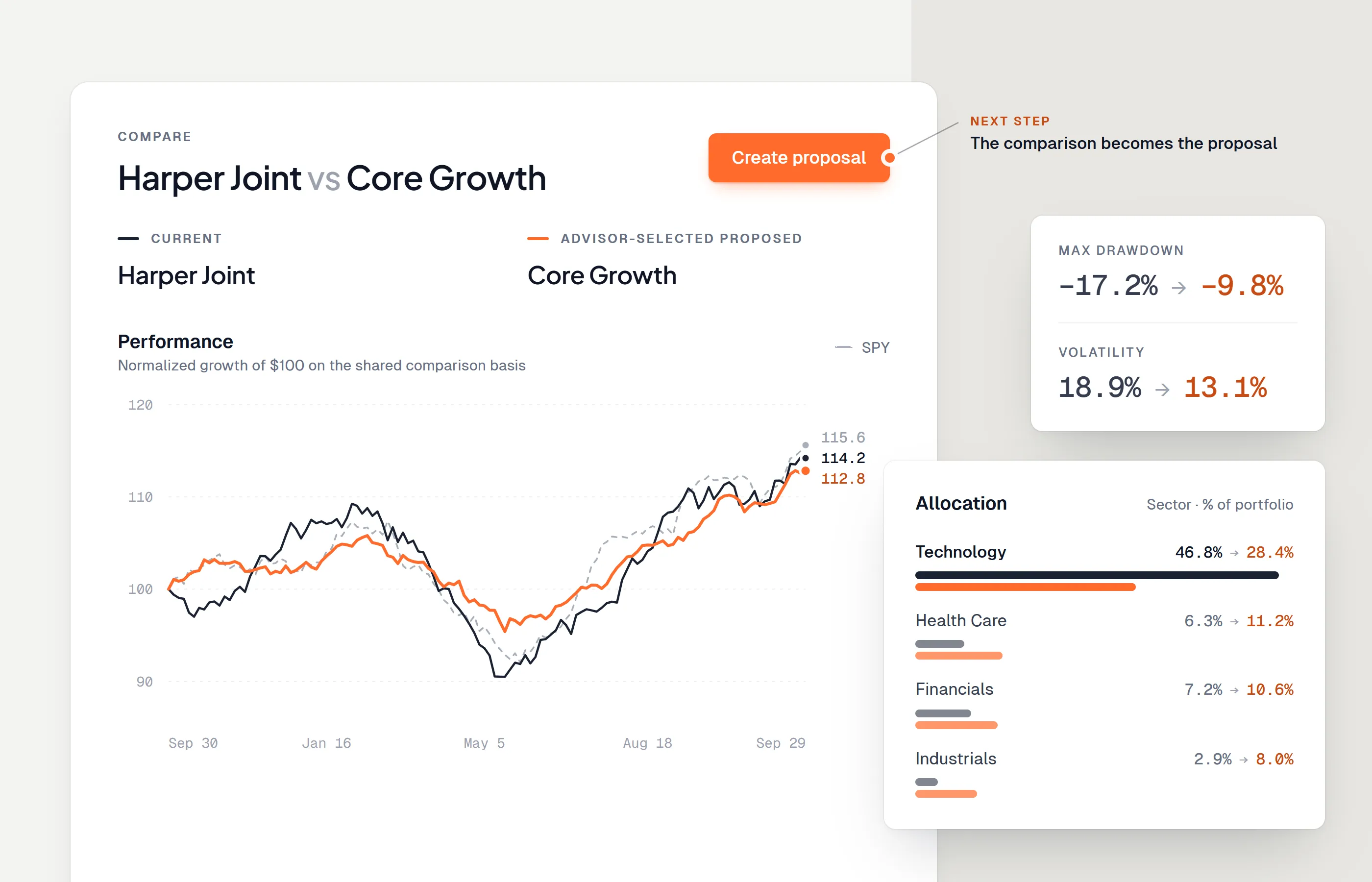
Concentration limit alerts enforce structural discipline automatically. By establishing maximum allocation thresholds for individual assets, specific sectors, or broader asset classes, the system flags any breach in real time. If your technology sector weighting drifts above a 20% mandate because of equity appreciation, an alert is delivered immediately — preserving the diversification architecture that underpins your risk framework.
This alert type directly counters one of the most persistent behavioural biases in investing: the tendency to let winning positions run unchecked until a single holding becomes a portfolio-defining vulnerability. Mechanical discipline removes the decision from the emotional domain entirely.
Best used for: Enforcing diversification rules; detecting unintended sector rotation effects; maintaining mandated asset class balance across market cycles.
4. Drawdown Breach Notifications: The Systematic Circuit Breaker
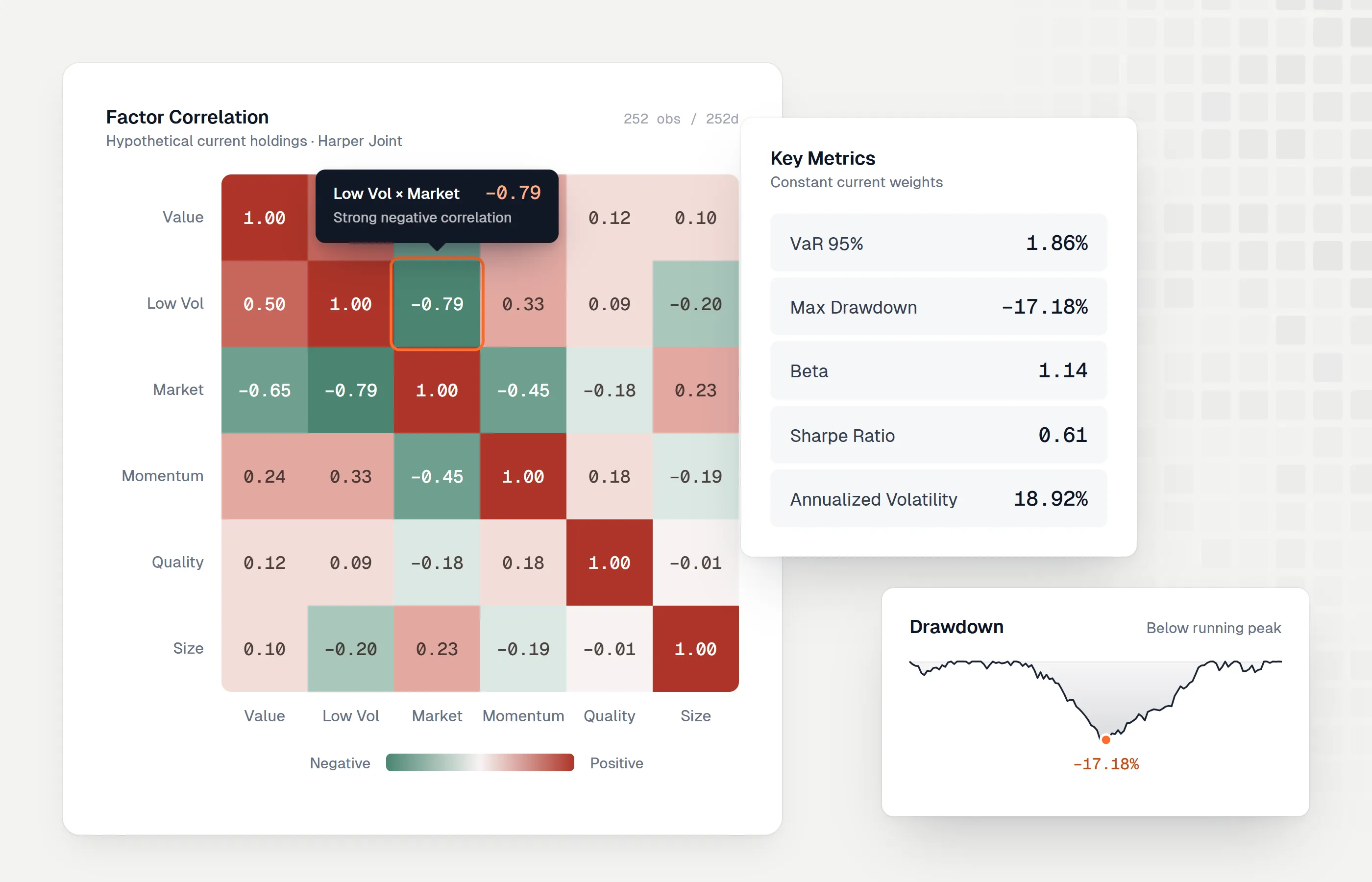
A drawdown measures the percentage decline from a portfolio’s recorded peak value to its current trough — the actual capital loss a strategy endures before recovering to a new high. Monitoring drawdowns is essential for distinguishing between a temporary market pullback and a fundamental breakdown in strategy performance.
A drawdown breach notification operates as a quantitative circuit breaker. Defining a rule in advance — for example, that a 10% decline from the portfolio’s all-time high triggers a mandatory review — removes emotion from the risk management process entirely. It forces a structured pause: re-evaluate your thesis against current market conditions, cut positions that are unlikely to recover, or deploy capital into new opportunities from a position of analytical clarity rather than reactive panic.
The appropriate threshold is a personal risk decision based on strategy type and time horizon. Conservative long-term investors might set a 7% trigger. Systematic strategies with defined recovery expectations may tolerate 15–20%. What matters most is that the threshold is defined before the drawdown begins — not while it is occurring.
Best used for: Systematic strategy management; capital preservation discipline; forcing structured reviews before losses compound.
How to Set Up Real-Time Portfolio Alerts in Genesis Risk Monitor
Configuring a four-layer alert system typically requires fragmented tools, custom scripting, or costly enterprise subscriptions. Genesis Risk Monitor consolidates all four alert types into a single visual platform with no coding required.
- Connect your portfolio. Link your holdings via broker integration or manual entry. All positions are synchronised with continuous real-time market data automatically.
- Open the Limit Monitor widget in your custom drag-and-drop workspace. This is the dedicated hub for all alert configuration.
- Set price-based alerts. Define upper and lower price thresholds for any individual holding in your portfolio.
- Define your VaR limit. Enter your maximum acceptable one-day Value at Risk in dollar or percentage terms. The system calculates and monitors your aggregate portfolio VaR continuously against this threshold.
- Configure concentration thresholds. Set maximum allocation caps at the position level, sector level, or asset class level.
- Set your drawdown trigger. Enter the maximum percentage decline from portfolio peak that should generate a notification.
- Activate monitoring. All four alert types run automatically in the background using live streaming data. No manual checking is required.
All alerts operate simultaneously. The system delivers notifications at the moment a threshold is breached — not at market close, not on a delay.
Conclusion
The gap between knowing a portfolio is approaching a risk limit and receiving a timely, actionable signal is where capital is lost. A four-layer real-time portfolio alert framework — price triggers, VaR limits, concentration thresholds, and drawdown breach notifications — closes that gap systematically, replacing manual monitoring and emotional reaction with quantitative discipline.
Understanding what each alert type measures and why it matters is the prerequisite. Having a platform that monitors all four simultaneously, continuously, and in real time is what makes the discipline operational.
Further Reading:
- How to Measure Investment Risk: VaR, CVaR, and Factor Exposure Explained
- How to Stress Test Your Portfolio
- Essential Stock Market Terminology Before You Buy Your First Stock
Disclaimer: The information provided by ABMS SOFTWARE LIMITED dba Genesis Risk Monitor is strictly for informational purposes only and should not be construed as an offer to sell, a solicitation to buy, or a recommendation for any security or strategy. ABMS SOFTWARE LIMITED dba Genesis Risk Monitor is not a broker or registered investment advisor. Trading in financial markets involves significant risk, and past performance does not guarantee future results.
Frequently asked questions
What is a real-time portfolio alert?
A real-time portfolio alert is an automated notification triggered when a specific risk threshold is breached across one or more holdings in a portfolio. Unlike basic price alerts that track a single stock price, real-time portfolio alerts monitor complex mathematical metrics — such as Value at Risk (VaR), sector concentration percentage, or maximum drawdown from peak — across an entire portfolio simultaneously, delivering a notification the moment a defined threshold is crossed using continuous streaming market data.
What is the difference between a stock market price alert and a portfolio VaR alert?
A stock market price alert monitors a single asset's nominal price and triggers when it crosses a fixed level — for example, when a stock crosses $200. A portfolio VaR (Value at Risk) alert monitors the aggregate statistical risk profile of all holdings combined. It triggers when the maximum probable loss across the entire portfolio, calculated at a given confidence level and time horizon, exceeds a defined risk tolerance — catching portfolio-wide risk spikes that no individual price alert could detect.
What is portfolio drift and why do concentration limit alerts matter?
Portfolio drift is the gradual, unintended shift in a portfolio's asset weighting that occurs as individual positions grow at different rates. A stock purchased as a disciplined 5% position can silently grow to represent 15% or more of total portfolio value following a sustained rally, creating dangerous concentration risk. Concentration limit alerts automatically detect these weighting breaches and notify the investor before the oversized position becomes a structural vulnerability to the entire portfolio.
How does a drawdown breach notification work?
A drawdown breach notification triggers when a portfolio's total value falls by a defined percentage from its highest recorded peak — the metric known as maximum drawdown. For example, if an investor sets a 10% drawdown alert, the system sends a notification the moment the portfolio is 10% below its all-time high. This acts as a systematic circuit breaker, removing emotion from risk management by forcing a mandatory portfolio review at a predefined, mathematically-defined loss level.
Why are real-time alerts better than end-of-day alerts for portfolio risk management?
End-of-day alerts only report conditions after market close, by which point significant intraday damage may already be irreversible. Real-time alerts powered by continuous streaming data detect threshold breaches as they happen — during earnings announcements, macroeconomic data releases, or flash crashes — enabling investors to respond within the active trading session when corrective action is still possible and price impact is at its most controllable.
Do long-term investors need real-time portfolio alerts?
Yes. Even long-term, buy-and-hold investors benefit from real-time portfolio alerts for three specific reasons: executing rebalancing trades at better prices before a position has already drifted significantly; identifying concentration risks before a single winning holding becomes a portfolio-defining liability; and acting on drawdown signals that indicate a strategy's underlying thesis may no longer be valid. Real-time monitoring does not require active trading — it requires awareness.